Table Of Content
- Easiest Online Businesses to Start: Your Ultimate Guide
- Content Pit Review: Is it Possible to Find Fast, Inexpensive, and High Quality Content?
- RankIQ Review: Is This AI SEO Toolset Worth Your Time and Money?
- Q5: Are there any tools or software that can assist in applying the CRAP principles?
- Achieving a Better UX With CRAP Design Principles
- Publish your article with us and reach a large community of eLearning professionals

By understanding CRAP, you can consistently deliver effective design, whether it’s for a website, a landing page, an eBook, or just a banner ad. Depending on the text language used, the left and right alignments, being LTR or RTL, are the most popular ones. We can use center alignment for short text spans (but is difficult to read on longer texts). Repetition in design is another important principle in the four CRAP principles of design. Let the CRAP principles guide you in crafting designs that captivate, engage, and leave a lasting impression on your audience. This principle is mostly used with text, although depending on the picture you are creating, there are plenty of other uses for it.
The Jambar's Evolution of Design: A 90-Year History - TheJambar.com
The Jambar's Evolution of Design: A 90-Year History.
Posted: Thu, 21 Jan 2021 08:00:00 GMT [source]
Easiest Online Businesses to Start: Your Ultimate Guide
Combining very saturated colors with dimmed, less saturated colors can be a great way to attract attention to essential elements. This web design in the image below shows a brilliant example of just that. Using high-contrast colors is one of the easiest ways to ensure that your website is easy to read. Black text on a white background is the standard for most websites, but you can also experiment with other color combinations to see what works best for your site. Just make sure that there is enough contrast between the colors so that users can easily read your text.
Content Pit Review: Is it Possible to Find Fast, Inexpensive, and High Quality Content?
Google Maps design secrets revealed - Creative Bloq
Google Maps design secrets revealed.
Posted: Thu, 10 Apr 2014 07:00:00 GMT [source]
It can be rough, smooth, hard, or soft to the touch or simply appear that way. If you've ever used Instagram to enhance an image, you'll have seen the highlight and shadow options. These allow you to brighten or darken certain areas of an image to add more character. For instance, if the flowers were faded and turning brown and the robot was dull and rusted. But instead, the bright colors help paint a scene that is innocent and welcoming. Even though most of the shapes here are symmetrical, we can still see some asymmetrical shapes, such as the birds, but are still classed as shapes.
RankIQ Review: Is This AI SEO Toolset Worth Your Time and Money?
Rapid elearning tools have made it increasingly easy to design and build good elearning without having to know how to code. Tools like Elucidat have unleashed the creativity of instructional designers, allowing us to build stunning elearning rapidy. And sometimes we need to take a step back and check that the results don’t end up as a mish-mash of fonts, random formats and awkward layouts. In unskilled hands, the tools available to us can very quickly produce messy, over-designed elearning that is far from perfect. Applying a few basic design skills can help avoid those mistakes.
Q5: Are there any tools or software that can assist in applying the CRAP principles?
By using contrasting colors, sizes, shapes, and typography, you can make certain elements stand out and draw users’ attention to them. Choose a color palette that includes both dark and light hues to create contrast between background and text. This ensures readability and accessibility for all users, including those with visual impairments. Online tools like the Web Content Accessibility Guidelines (WCAG) provide guidelines for ensuring color contrast meets accessibility standards. The explanation of the CRAP design principles is essential for understanding their impact on user experience. These principles, Contrast, Repetition, Alignment, and Proximity, are powerful tools that can greatly enhance the usability and visual appeal of any design.
Visual Weight
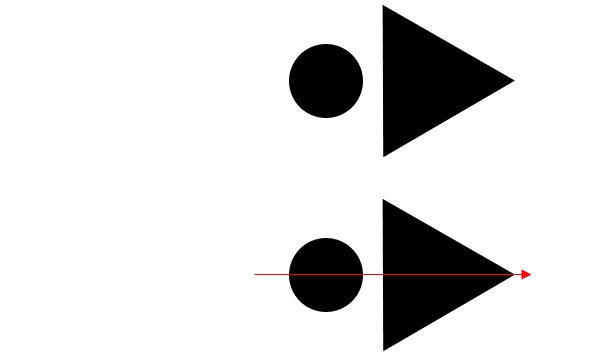
A helpful tool for this task of organizing everything visually can be a grid. You can find them in design apps as a feature that makes the alignment process easier. This consistency of soft colors allows their page to pull off bold design decisions such as strong asymmetry and scrolling banners. In the end, it’s both attention-grabbing and gentle with a professional look. Also, the same colors are repeated throughout the whole infographic. As a result, even though each section looks very different, these similarities tie everything down in a unified way.
Achieving a Better UX With CRAP Design Principles
In conclusion, the integration of CRAP principles for seamless user interaction is essential for modern online platforms like Instacart. By prioritizing user experience through effective design principles, Instacart can differentiate itself in a competitive market and build lasting relationships with its customers. Alignment ensures that elements on a page are visually connected, creating a sense of order and organization.
However, on the right, when the proximity principle is applied correctly, everything is much clearer. Each thumbnail with belonging elements is separated from other thumbnails using whitespace. When you group items correctly, you make it much easier for users to find what they are looking for quickly and easily. It is especially important for e-commerce websites where users need to be able to find products quickly and efficiently without getting frustrated. Center alignment is not the right choice when you have larger blocks of text. As we can see in the attention heatmap, there is a large red hotspot over the red lettering.
Publish your article with us and reach a large community of eLearning professionals
By using the CRAP design principles, you can create a more user-friendly website that is easy to navigate and looks more professional. These principles can be applied to any type of web page, whether it is a landing page or an e-commerce site. The proximity principle states that related elements should be close to each other so that users can easily see the relationship between them. Vice versa, you can distinguish unrelated items by creating distance between them. The slides convey a repetition of a set of colors, and the style of text and images.
Clustering similar items together is a great way to reduce clutter on your site and make it more visually appealing. It can reduce complexity and make it easier to process longer and more complex web pages. However, not only e-commerce websites benefit from the proximity design principle. Well-applied proximity principle is valuable in each type of design.
The four design practices, when applied together, more often than not lead to brilliant designs that delight users and get them clicking. This post elaborates on each of the CRAP principles to help you understand what goes behind crafting engaging designs that improve your UX and conversion rates. These design practices, when applied together, more often than not lead to brilliant designs that delight users and get them clicking. By leveraging CRAP, you can consistently deliver effective designs, whether it’s for a website, a landing page, a checkout page, an eBook, or just a banner ad. C.R.A.P., a design principle developed by Robin Patricia Williams, stands for Contrast, Repetition, Alignment, and Proximity.
Contrast is a fundamental design principle that involves creating visual differences between various elements on your website. It’s all about making certain elements stand out from the rest, grabbing the viewer’s attention, and guiding their focus. Proper use of contrast helps users quickly identify important information and navigate your site with ease.


No comments:
Post a Comment